
KX Flow · FX Trading & Analytics Platform
Streamline Your Entire FX Operation.
Pricing, execution, risk, and analytics run on a single turn-key, white-label FX platform — built on kdb+, the engine already running inside the world’s fastest trading desks.
See the Platform, Not the Pitch
The Trading Panel Your Desk Runs On.
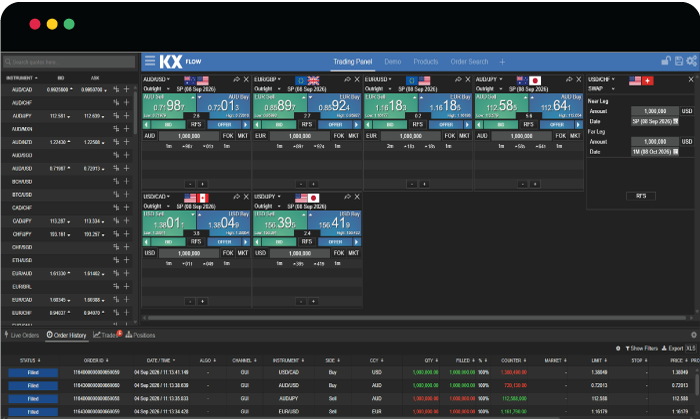
Every Pair You Trade, on One Screen
Each tile in the Trading Panel holds one product. Traders lay the panel out around the pairs they actually work and quote straight from it — outright or swap, without opening another window.
Beneath the panel, one blotter follows orders, fills, positions, and P/L as they move. Every tile prices off the same aggregated feed, so the price a trader sees is the price a client gets.
Order Entry
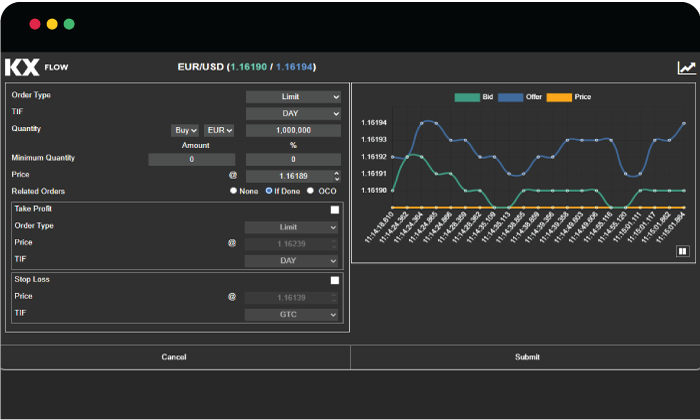
The Ticket Watches the Market With You
Set order type, time in force, quantity, and minimum fill, then attach a take profit and a stop loss to the same ticket — as If Done or OCO, so the exit is decided before the entry goes in.
Bid, offer, and your working price plot live alongside the form. The trader sees the market move while the order is still being written, instead of switching windows to check whether the level still holds.
On Screen
- ESP and RFS quoting side by side, outright or swap
- Market depth and spread behind every price
- A searchable quote list of every instrument you trade
- Live orders, trades, and warehoused positions in one blotter
- Dealer intervention, request history, and taker settlement on the same screen
- Realized and unrealized P/L, updating as the market moves
Pool Management
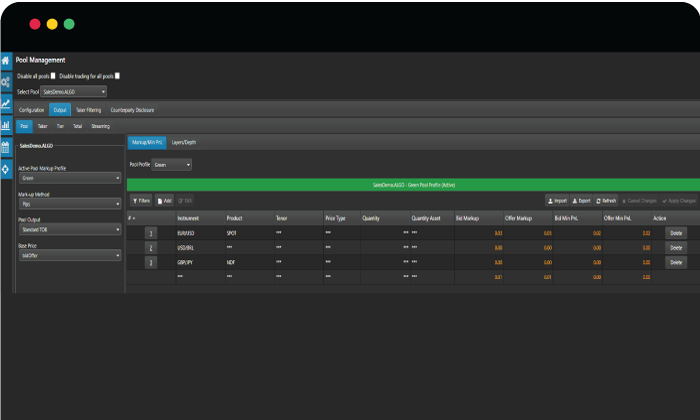
Your Pricing Rules, Not a Support Ticket
Build a pool, pick a mark-up profile, choose the method and the base price, then set bid and offer mark-ups row by row — EUR/USD spot, GBP/JPY NDF, whatever the tier trades. Import them in bulk, export them for review, and nothing reaches a client until you apply the change.
Taker filtering and counterparty disclosure sit on the same screen, and a kill switch disables one pool or every pool at once. The desk runs its own pricing, so a mark-up change takes a minute instead of a release.
KX Flow Trading Capabilities
Four capabilities cover the trade lifecycle end to end, from the first streamed price to the filled order.

Liquidity Aggregation
Stream prices from the world’s top market-making banks, non-banks, and ECNs into pools you define. Dynamic filters, spike controls, and synthetic cross-rate creation decide what actually reaches the desk.

Pricing & Mark-Ups
Price by instrument, tenor, and customer tier, then distribute through SDPs, MDPs, and APIs. An external mark-up change reaches the published price in under 20 milliseconds.

Risk & Position Keeping
Warehouse to rules you set, auto-hedge on P/L, position, or trade size, and hold credit on a NOP, DSL, or margin basis. Change any rule mid-session, without waiting for a quiet market to do it in.

Order Management
Routing logic runs before execution: warehouse checks, minimum profit, position limits. Orders then fill internally against other clients, sit warehoused, or route to the liquidity provider you chose.
The Engine Underneath
Built on kdb+. Priced in Milliseconds.

Under 20ms
Mark-up update to published price

Full Depth Capture
Proof for the regulator, not a nightly extract

Scales Under Stress
Performance holds through peak volatility
The Database Behind the World’s Trading Desks
kdb+
The World’s Fastest Time-Series Database
For over two decades kdb+ has run mission-critical capture and analytics inside global banks. Choosing KX Flow means choosing that engine, and the round-trip performance that comes with it — which is what lifts fill ratios and tightens the price you show.
FX NDFs NDSs Metals CFDs
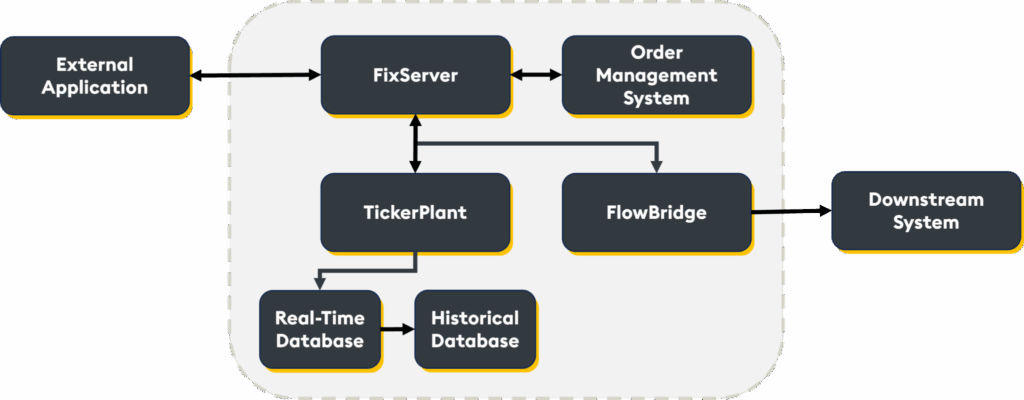
FixServer Order Management TickerPlant Real-Time Database Historical Database FlowBridge FXTrader UI KX Dashboards
How It Works
From Liquidity Feed to Filled Order.
01
Ingest and Aggregate
KX Flow ingests real-time FX quotes from your catalog of liquidity providers over FIX, filters them to each user, and captures every message through the TickerPlant into an in-memory real-time database.
02
Price, Route, and Execute
The order management system checks the order against your rules before it executes, then fills the order internally or sends it to your chosen liquidity provider. Every action lands in the event audit log as it happens, intra-day and historically.
03
Analyze and Extend
Historical tick data lands on disk for pre-trade and post-trade analytics, including transaction cost analysis with fine-grained access to price and order behavior. FlowBridge passes live quote and order updates on to your downstream algo systems, custom APIs, and multi-bank portals.
Deployment & Delivery
| Hosted or on-site. Run KX Flow inside your own infrastructure, or take it hosted from LD6, NY4, or TY3 with fiber cross-connection to liquidity sources. | HTML5, everywhere. The browser interface reaches desktops and mobile devices alike, so your traders and your clients work from the same platform. | Straightforward implementation. The rollout is designed to minimize disruption to trading operations already in flight. |